
Facts
Good to know
spaces in the batch storage
maximum batch gross weight
Latest hardening plant technology and long-lasting service
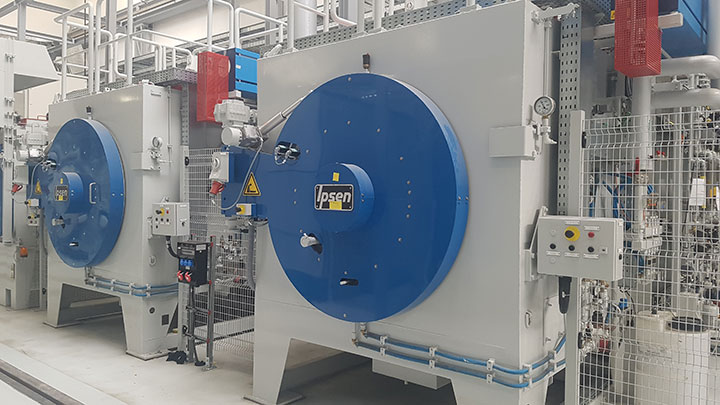
The hardening plant was completely renovated between 2016 and 2018 and now boasts the latest heat treatment technologies for use in various heat treatment processes.
The modern plant makes it possible to produce oxidation-free surfaces, eliminates retained austenite and enables uniform low-pressure carburizing.
Alongside the process optimization, these new developments also play a role in sustainably maximizing the service life of components.
Our contract hardening plant is available to all customers from the hardening technology, surface technology and material analysis sectors.


Our heat treatments at a glance
Low-pressure carburizing
- Carbonitriding
Nitriding
- Nitrocarburizing
- Nitrocarburizing with post-oxidation
- Oxynitriding
Hardening
Deep-freezing with tempering
- Tempering
- Stress-relief annealing
- Soft annealing
- Normalizing
Our plants enable a gross weight of 800 kg per batch with dimensions of 900 x 600 x 600 mm (L x W x H).
Processes
As a full-service provider we can offer the complete heat treatment processes form a single source.
Hybrid cleaning is an alkaline/alcoholic ultrasonic cleaning process with maximum cleaning power. Three cleaning methods are possible: Swivel cleaning, spray cleaning and air purification.
Other benefits:
- Vacuum drying of components after cleaning
- Regular concentration measurements of the cleaning medium in our internal chemistry department
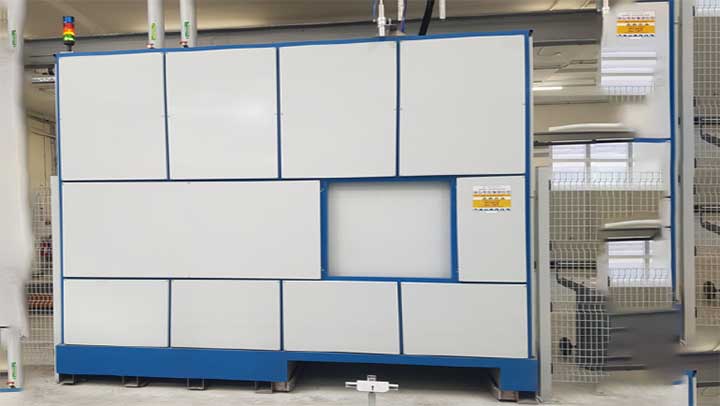
In contrast to conventional carburizing, low-pressure pulsed carburizing prevents surface oxidation which would go on to cause component failure. This new technology therefore extends the service life of components.
Other benefits:
- The carbon transfer rate is very high
- Extremely uniform carburizing even with complex geometries
- Excellent cost-effectiveness thanks to minimal gas consumption
- Short process times thanks to high carburizing temperatures
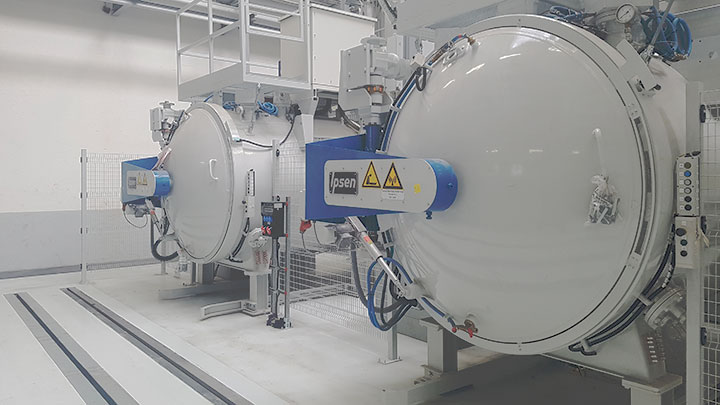
Vacuum hardening with high-pressure gas quenching takes place at a nitrogen pressure of up to 20 bar and prevents surface oxidation.
Other benefits:
- Single-chamber furnace with reversing cooling
- Two-chamber furnace with cold chamber
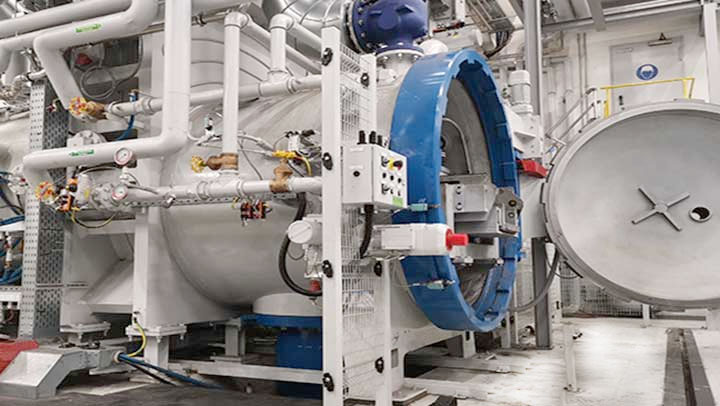
The deep-freeze furnace is able to cover a temperature range from -120 °C to 600 °C. This makes deep-freezing with subsequent tempering possible without needing to change furnace.
Other benefits:
- The deep-freezing process minimizes the retained austenite content in the component
- No corrosion on the components
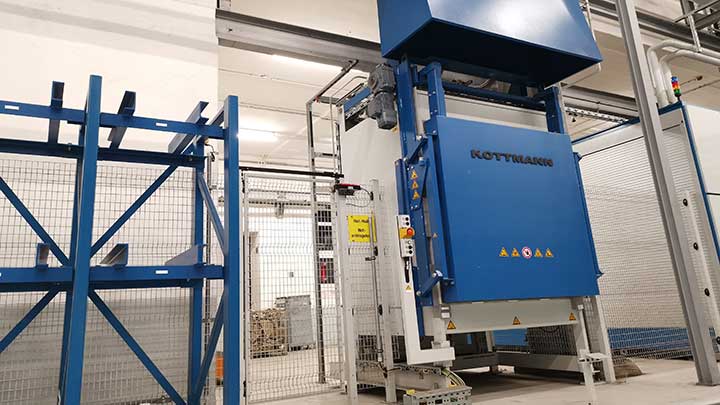
Gas nitriding with nitriding potential control is adapted to the furnace load.
Other benefits:
- The furnace systems have an oxygen probe to precisely monitor the pre-oxidation and post-oxidation processes
- External rapid cooling at the furnace systems speeds up the cooling process and reduces the process times
- Controlled gas nitrocarburizing is possible
Long-standing experience and highest quality
By loading the video you agree to YouTube's privacy policy.

“We can offer everything from one source, from a hybrid cleaning plant to a deep-freeze furnace.”
Andreas Büttner, Process Engineer Heat Treatment
Your benefits
- Highest quality standards
- Innovative production processes
- Complete service from a prototype to series production
- Fully automated production operations around the clock
- Certified according to DIN ISO 9001:2008
- Certified according to DIN ISO 14001:2004
- Certified by the DNV GL classification society
Benefit from our many years of experience and the most advanced plant technology.
